
Research center software
For National Science Foundation research centers
SimplyScholar keeps the records your annual Research Performance Progress Report (RPPR) draws on: people with their roles and dates, publications as they appear, and outreach and events. Your public website comes from the same records.
We have built National Science Foundation (NSF) program and center websites since 2016.
The annual project report
What the annual report asks for
Research.gov asks for the same sections every year. Most of the work is finding the records, which are spread across many people and places.
- Participants
- Every person, their role, and when they joined or left. NSF now emails participants directly for their demographic data, so what the report needs from you is an accurate roster. SimplyScholar keeps that roster current all year.
- Products
- Publications arrive from CrossRef as they are published, matched to your researchers. Each one also appears on your public site.
- Broader impacts
- Research Experiences for Undergraduates (REU) and Research Experiences for Teachers (RET) cohorts, K-12 activity, workshops and public engagement, each recorded when it happens. Broader impacts (Merit Review Criterion 2) are the hardest part of the report to show a year later, so it helps to record them at the time.
The site visit
Answer site visit questions in the room
A reviewer asks how many undergraduates were in the center in year three, and which research group they were in. The answer is in your records.
- Every person, every year
- Each person’s role and start and end dates, for every year of the award.
- Every paper and event
- Publications, events and outreach records for the whole award, in one place.
By program
Built for each program’s structure
A Materials Research Science and Engineering Center (MRSEC) reports by Interdisciplinary Research Group (IRG). A Partnership for Research and Education in Materials (PREM) reports on the partnership. A Materials Innovation Platform (MIP) reports on its user program. SimplyScholar records people and work in the groups your program uses.
- MRSEC
- Each IRG as its own group, with people, publications and seed projects attributed to the right one.
- PREM
- The partnership is the award. People and publications from each partner institution, shown together on one site.
- DMREF
- Designing Materials to Revolutionize and Engineer our Future (DMREF). Smaller teams across several universities, with publications matched to each team member. We build dmref.org with UC Santa Barbara.
- MIP
- The user program is the deliverable. Each shared instrument has its own record and its own page. We built mip.org with Penn State.
- NeuroNex
- Next Generation Networks for Neuroscience (NeuroNex). Teams across many institutions. We built neuronex.org, the NeuroNex program website, for the University of Houston in 2018, and SimplyScholar grew out of that work.
- EPIIC
- Enabling Partnerships to Increase Innovation Capacity (EPIIC). We built the program website and the EPIIC Assistant, which answers proposal and award questions.
Program websites built on SimplyScholar
-
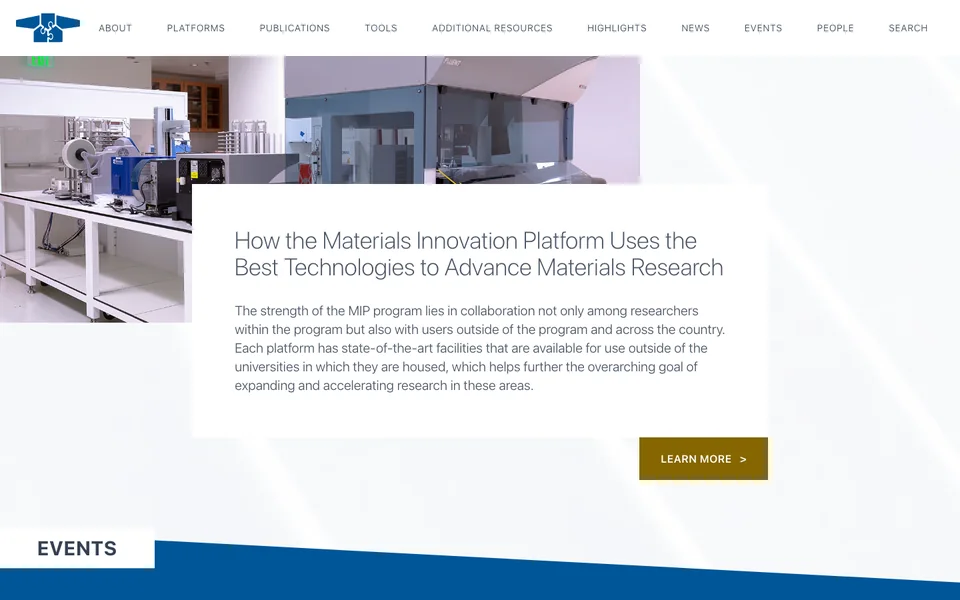
mip.org
Materials Innovation Platforms
-
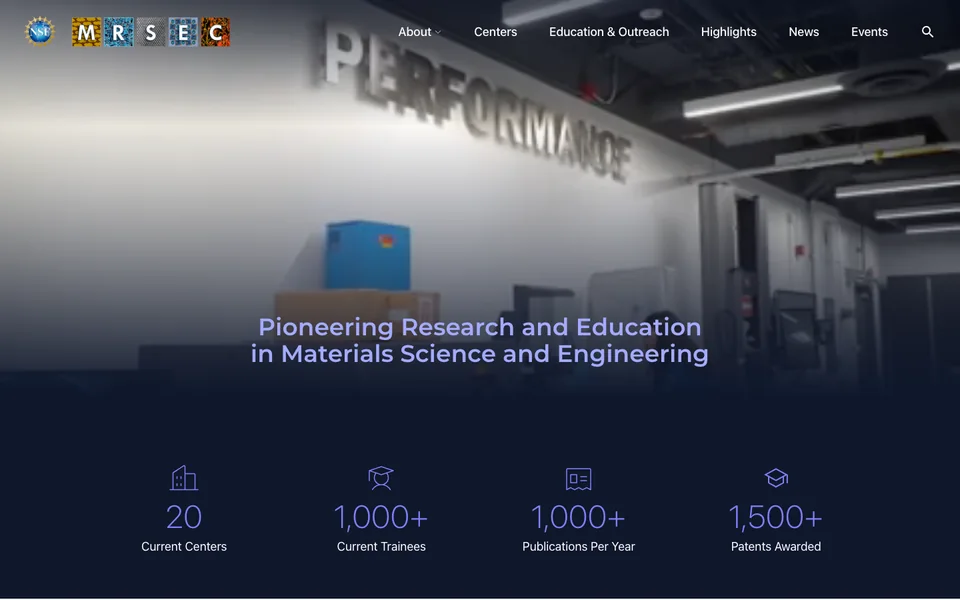
mrsec.org
Materials Research Science and Engineering Centers
-
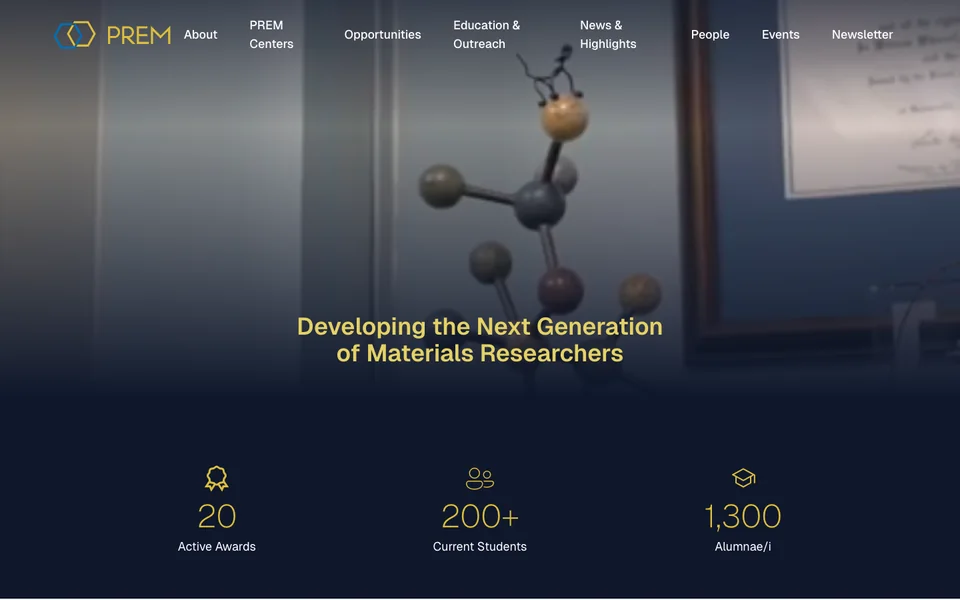
prem-dmr.org
Partnerships for Research and Education in Materials
-
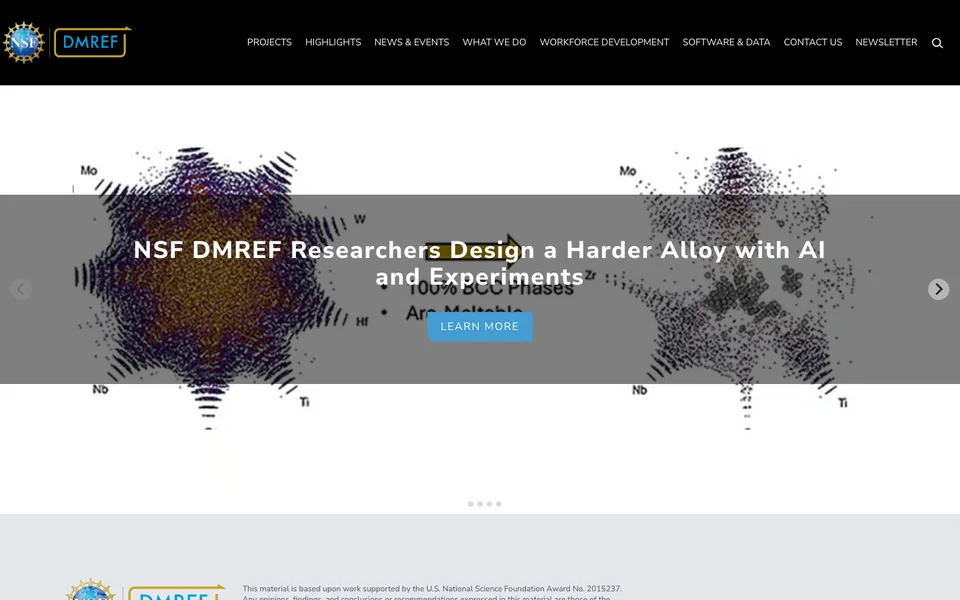
dmref.org
Designing Materials to Revolutionize and Engineer our Future
-
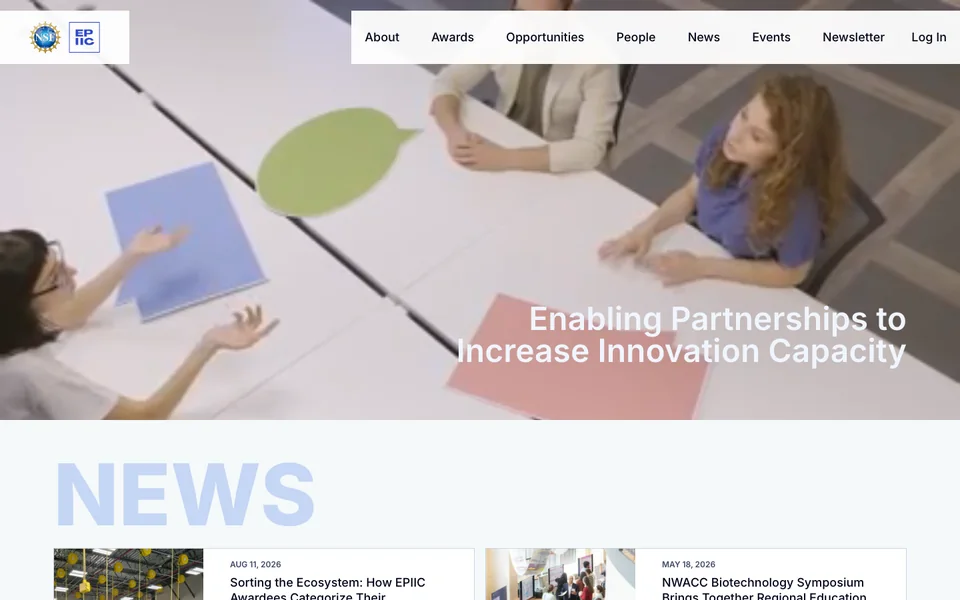
nsf-epiic.org
Enabling Partnerships to Increase Innovation Capacity
-
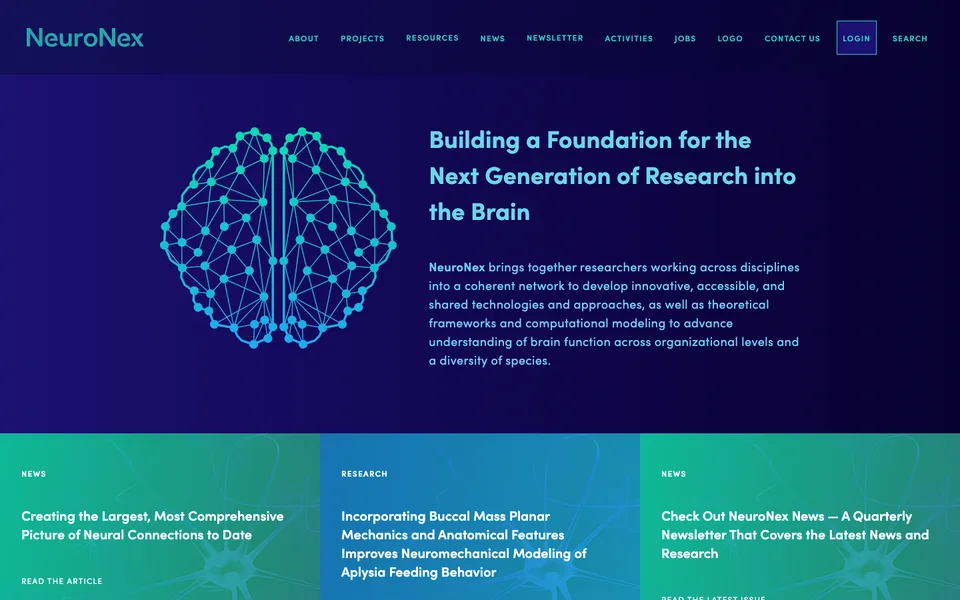
neuronex.org
Next Generation Networks for Neuroscience
See your center’s records in SimplyScholar
A 30-minute demo using your own data.